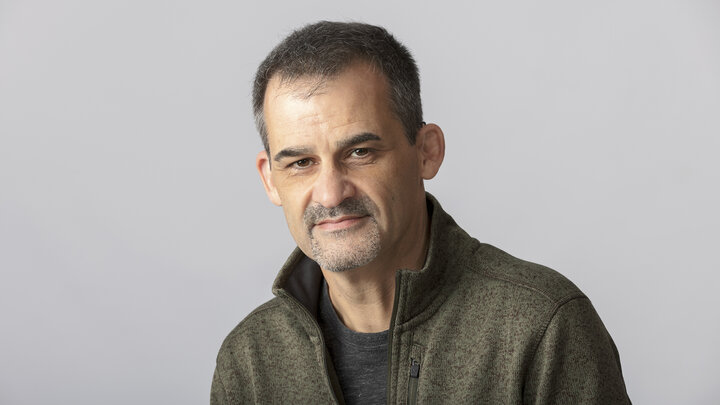
Lincoln, Neb.--Composer, songwriter and producer Stephen Bray has taken a circuitous path through the music industry — from playing drums in his parents’ basement to producing records and co-writing the Tony Award-winning musical “The Color Purple.”
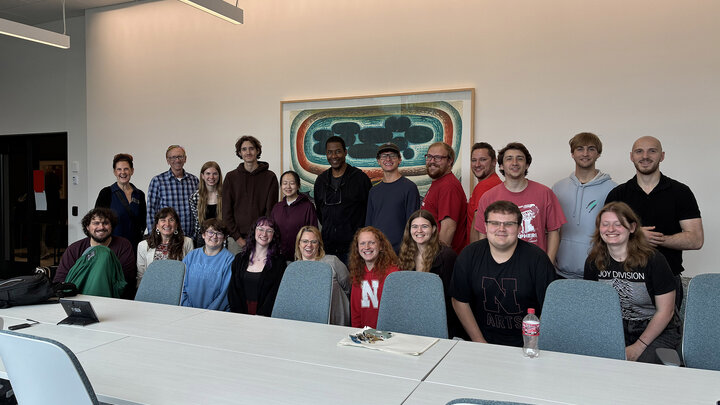
During a recent visit with students in the Glenn Korff School of Music, he encouraged them to embrace that same sense of possibility in their own careers. Bray was in town as part of the Lied Center for Performing Arts and ASCAP Foundation Musical Theatre Workshop “Grow a Show.”
Bray is a 30-year veteran of the entertainment industry. Heco-wrote and produced many of Madonna’s classic hits, including “Into the Groove,” “Express Yourself,” “Crazy for You,” “Papa Don’t Preach,” and many more. His Broadway debut as composer/lyricist of “The Color Purple” earned him one of 11 Tony nominations and a Grammy win for Best Musical Theater Album. Bray also executive produced the eponymous film adaptation produced by Amblin Entertainment.
Bray’s most important piece of advice was simple: Say yes — even when you aren’t sure you know how to do something.
“I think in almost every step along the way, I said yes and had no idea how to do the thing,” Bray told students. “And it was like, yes really means yes, I’ll figure it out.”
He offered “The Color Purple” as a prime example. When Bray and collaborators Brenda Russell and Allee Willis were asked to write the musical, none of them knew how to write a Broadway musical. Their response was not to turn down the opportunity. They went to a bookstore and bought books about musical theater and studied recordings, using what they could find to teach themselves.
“I feel like it’s good advice to just figure it out,” he said. “Just always say yes, because there’s not that many times you get the opportunity.”
Bray paired that advice with another principle: Don’t be the smartest person in the room.
“Always try to be in a room where you’re not the smartest,” he said. “Don’t be the smartest person in the room because you will have nothing to learn.”
For Bray, learning also comes through listening — an ability he developed in part through his early work as a drummer. Because drummers spend much of their time listening to how the other musicians fit together, he said, the experience taught him to recognize when an arrangement works and when elements are competing with one another.
He encouraged students to develop that same discernment by listening widely and studying what makes different kinds of music successful.
“Learn about all the different permutations of how musicians use rhythm and time and pitch and harmony,” Bray said.
He advised students to become familiar with examples of excellence across genres and then compare what they hear with those examples.
Bray also emphasized the value of collaboration. He said he enjoys working with others because collaboration keeps a project moving and prevents one person from becoming stuck on a decision. With his “Color Purple” collaborators, for example, the group worked by consensus of two, allowing the third person to continue developing an idea without bringing the entire process to a halt.
As students prepare for careers in a rapidly changing industry, Bray also urged them not to let technology replace the fundamentals. Discussing artificial intelligence and tools such as Suno, he said musicians and producers still need to understand skills such as microphone placement, signal-to-noise ratio and how to capture the sound of human performers.
“It’s so important that people still know how to do things,” he said.
Ultimately, Bray returned to the human skills that have helped him navigate his own unconventional career.
“Be likable, be a great listener, you know, amazing communication skills,” he told students. “You’re going to be hired if you know what you’re doing.”