For two weeks this summer, students from the University of Nebraska–Lincoln traded practice rooms and classrooms for the bustling streets of Mexico City, where every neighborhood offered a new soundtrack and every conversation became an opportunity to connect across cultures.
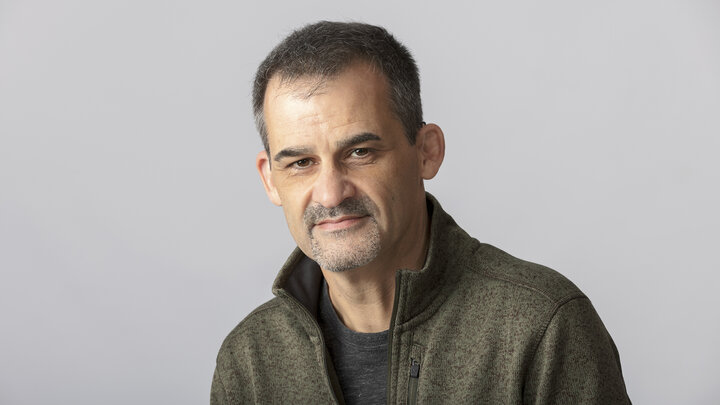
Led by Kristen Graves, assistant professor of ethnomusicology in the Glenn Korff School of Music, the study abroad course Music and Sound in Mexico City immersed students in one of the world's largest urban centers, encouraging them to experience music not simply as performance, but as a living expression of culture, community and everyday life.
For many participants, the experience was transformative. It was the first time they had traveled outside the United States. For some, it was even their first airplane flight.
"I would just describe it as so much better than I even expected," Graves said. "The students, I think, seeing them experience a brand new place, though so far outside of what they know, was really important. So many students, this was their first time out of the country. Some of them, it was their first time on an airplane. So watching them navigate brand new experiences was kind of an honor. It was really amazing to be the one who got to help coach them through that."
The course challenged students to think differently about music by introducing them to the concept of "deep listening," developed by composer and scholar Pauline Oliveros. Rather than simply hearing sounds, students learned to understand the cultural, historical and social contexts that give those sounds meaning.
"The purpose of the course was to expose students to as many sounds and musical styles as possible in this huge urban center," Graves said. "You're hearing so many different types of music, and from everywhere."
Students quickly discovered that Mexico City's soundscape defied their expectations.
"They were expecting a particular style," Graves said. "That's not what happens there. Each storefront is playing music and has a speaker up front, and there are street-side musicians, and there's a band that's playing for free in the park, and people are dancing here. You move 10 feet further, and there's a whole different soundscape."
The experience encouraged students to become active listeners, paying attention not only to concerts and performances, but also to the rhythms of daily life.
"The main theme we were using throughout was this phrase called deep listening," Graves said. "Not only are you listening to all the sounds and sensing the sound with your whole body, but you're also understanding the context and the larger cultural implications around the sound."
One example came from the sounds of street vendors. Students from the music course worked alongside students studying entrepreneurship and business, examining how vendors used distinctive calls and musical phrases to attract customers.
"We were speaking with a lot of the entrepreneurship and business students about marketing and promotional sounds and the way that people really pursue a client," Graves said. "What did that sound like?"
The interdisciplinary approach became one of the defining strengths of the experience.
Sophomore music education major Brennan Clark said sharing the trip with students from other academic disciplines broadened everyone's perspective.
"It was actually very insightful to be with each other the whole time," Clark said. "We got to see things from a different point of view. Since I was very focused on the sounds and music I was hearing, it was nice to hear what the people studying business were focusing on. I feel like all of the classes were helping each other out and enriching each other with the knowledge they were learning."
For Clark, who had never traveled abroad before, the course offered far more than an academic experience.
"I wanted to go on this trip just to explore what the world was like outside of the U.S.," he said. "This was my first time abroad, so it was kind of nerve-racking to sign up, but I am so happy I did. I learned so much about myself, life and the world."
Students visited Mexico's National Sound Archive, where archivists curated a listening session featuring recordings that reflected the country's rich cultural history. They heard everything from speeches and historic commercials to informal recordings of celebrated artist Diego Rivera singing in a neighborhood pub.
The archive itself is housed in the former home of Nobel Prize-winning poet Octavio Paz, creating another unexpected intersection of literature, history and sound.
"They curated this whole experience so the students could hear this breadth of sounds," Graves said.
Another highlight took students to an Indigenous chinampa farm, where traditional agricultural practices dating back to pre-Columbian times are being preserved and revitalized.
Accessible only by boat through a network of canals, the floating agricultural islands became an unexpected classroom where students explored ecology, sustainability, commerce and culture through sound.
"They talked about the commerce of it. They spoke about why this is so culturally relevant," Graves said. "Then, of course, the sounds that you have to learn of insects and predators and plants as you're weeding."
The interdisciplinary visit resonated with students across every major.
"It was really a wonderful interdisciplinary experience," Graves said. "As we were going through the surveys, that was probably one at the top."
The farm also became the setting for one of the group's favorite memories, as students discovered they were literally standing on floating ground.
"The tour guide had us line up and number off one, two," Graves said. "All the ones jumped, and then the twos—we could feel the ground move. That's because we're on water."
Beyond the academic discoveries, students found themselves growing personally as they navigated unfamiliar environments, languages and customs.
"You learn so much about who you are outside of your comfort zone and away from your usual amenities," Clark said. "You learn to problem solve without your usual resources. You learn how to communicate with others you might not share a language with. Being somewhere that does not have the same cultural norms really opens your eyes to how there is not just one way to go about living life."
Clark said the experience has already changed both his musicianship and his outlook.
"I have grown as a person and a musician," he said. "I have become more open to talking with new people. I have learned to be okay with discomfort and how to find comfort in an unfamiliar place. From the class, I have learned to listen to all layers within a space, which can be applied to music ensembles and individual practice."
Junior music and advertising major Latron Louis also came away with a deeper appreciation for cultural immersion.
"I think studying abroad is important because being able to immerse yourself in another culture and learn from the way they do things really helps in the long run," Louis said.
Although the itinerary was packed with museum visits, performances, historical sites and cultural experiences, Louis said the memories that endure are more personal.
"We packed so much in two weeks so I may not remember every conversation I had," he said. "But I will always remember the love I felt there and the joy that the city had to offer. Mexico puts a huge emphasis on love and culture. Being a part of that, I feel like my mindset has shifted to love even more."
For Graves, those moments of connection—both within the group and with the people they encountered—illustrate why international experiences are so valuable.
"The world is getting smaller," she said. "Music is such a low-risk way to connect with people. You listen to music on the street, and you find out that everyone's tapping their foot to the same beat. It's a really easy way to introduce people to a new culture, to meet someone, to share some common ground."
The trip also strengthened relationships among the students themselves.
"They've shared this really deep, powerful experience together," Graves said. "It honestly cements their community within UNL that much more deeply because they're able to draw from this experience that they had together elsewhere."
For Graves, that combination of cultural awareness, professional networking and personal growth is precisely what makes study abroad such a meaningful part of a student's education.
"As much as I love our new music building," she said, "I think getting out of the building, having students practice public listening, and having them witness music in the wild, so to speak—but also in a place that is brand new for them—is something they'll carry with them long after the trip ends."